
Music of the United States: from blues to hip-hop
American music is a mix of many sources, so it sounds like many things: church choirs, brass bands, guitars, drum machines and huge stage shows. This page follows some of the big styles from long ago to today.
In this lesson
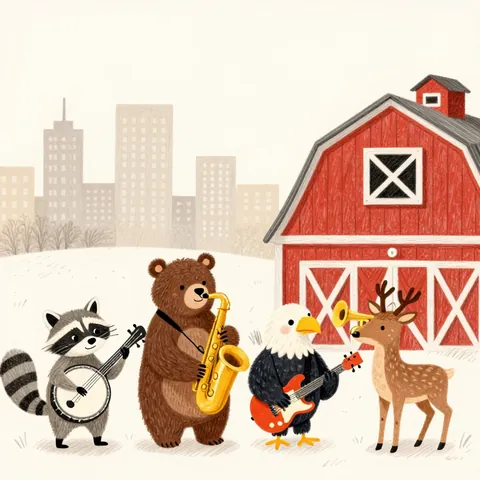
What does American music sound like?
American music has several roots: songs and drumming of Native American peoples, folk songs and hymns brought from Europe, and rhythms and ways of singing brought from Africa. Many songs and sounds made by African American communities are an important source of American music. These sounds met and mixed, and new styles grew from them.
The blues grew up among African Americans in the South and was a clear style by the 1890s, with "blue notes" and call-and-response singing. Gospel made church singing even stronger and grew up in the 1930s, especially in Chicago. Jazz took shape in New Orleans around 1900, with improvising and swinging rhythms, and instruments like trumpet, saxophone, clarinet and piano.
Country music rose in the Southern states in the 1920s, mixing folk songs, blues and hymns, played on guitar, fiddle and banjo. In the 1950s, rock and roll blended blues, gospel and country, and the electric guitar became a star. In the 1970s, hip-hop began at parties in the Bronx, in New York City: DJs stretched the beats with two turntables while others rapped along.
The country also has music for stages and screens. Broadway musicals combine songs, speaking, acting and dance, and Hollywood film scores use orchestras to make a movie feel bigger. The composer George Gershwin put a jazz flavour into concert music, and Aaron Copland and Leonard Bernstein wrote pieces that sound very American too.
The 12-bar blues and the blues scale
Many blues songs follow the same 12-bar plan built on three chords, I, IV and V. In C they are C, F and G: four bars of C, two of F, two of C, then one bar each of G, F and C, and a last bar of C, or of G to lead back to the start.
The words often go A A B: a line is sung, sung again, then answered by a new line. Rhythm and blues and rock and roll grew from this plan, and the Song form lesson shows it bar by bar.
Blues players often use the blues scale: the minor pentatonic scale plus one extra note. On C it goes C, E♭, F, G♭, G, B♭, C. Singers and guitarists also bend notes slightly higher or lower, to places between the piano keys.
Play C, E♭, F, G♭, G, B♭, C on a piano, up and down. Then make up a short tune using only these notes.
The story of one song: Jingle Bells
James Lord Pierpont's Jingle Bells was first performed in Boston in 1857, but under another name: "The One Horse Open Sleigh." Sleigh rides were a popular pastime then. The title we know came with a new edition in 1859.
Nobody is sure where or when he first wrote it. Boston, Medford and Savannah have all been named in different stories, so historians are still checking.
On 16 December 1965, two astronauts on Gemini 6 played it in space with a small harmonica and some bells, as a surprise for Mission Control. Those instruments are now in a museum.
Traditional and special instruments
Here are some instruments you can look up and listen to.
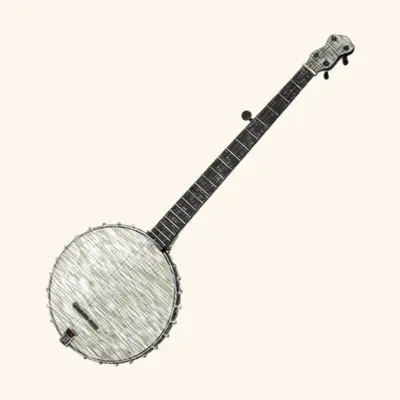 Banjo
A plucked instrument with a round, drum-like body; the usual American kind has five strings, with a short fifth string, and it was shaped from African instruments by African Americans.
How it is built: The body is a round frame with a tight drum-like skin stretched over it, and a long neck with frets is attached to it. The strings pass over a bridge on the skin, which makes the sound ring out.
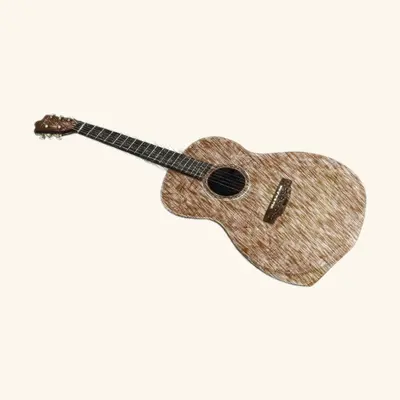 Steel-string guitar
An acoustic guitar with steel strings, which sound brighter and louder than nylon ones; it is heard in folk, blues, country and bluegrass.
How it is built: The body is a hollow wooden box with a round hole in the top. Plucked steel strings shake the thin top, and the air inside the box makes the sound bigger.
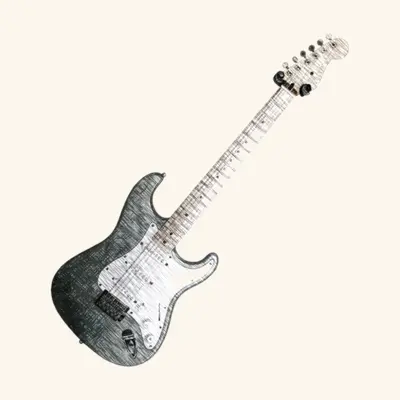 Electric guitar
A guitar whose pickups turn string vibrations into electric signals for an amplifier; the first successful ones appeared in the 1930s, and jazz, blues and country players soon took them up.
How it is built: The body is usually a solid slab of wood with no big hollow box. Magnets wrapped in thin wire under the strings turn their shaking into electricity for an amplifier.
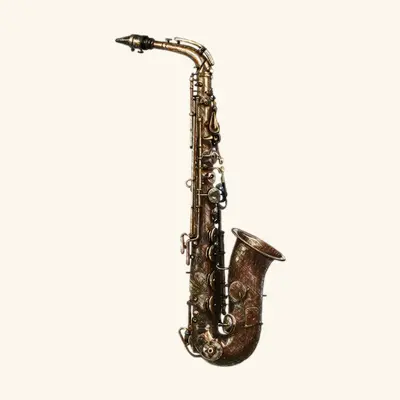 Saxophone
Designed by Adolphe Sax of Belgium around 1840; it has a metal body but a single reed like a clarinet, and it became a star of jazz.
How it is built: The body is a curved brass tube that gets wider toward the bell, covered in keys and pads. A single thin reed on the mouthpiece buzzes when you blow, and the keys open holes to change notes.
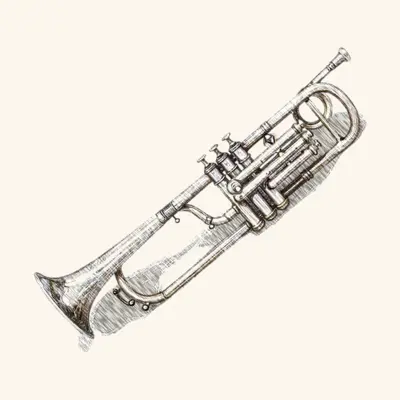 Trumpet
A brass instrument with three valves, played by buzzing the lips into the mouthpiece; jazz players like Louis Armstrong made it famous.
How it is built: The trumpet is a long brass tube bent into a compact loop, ending in a flared bell. Pressing a valve sends air through an extra bit of tubing, which makes the note lower.
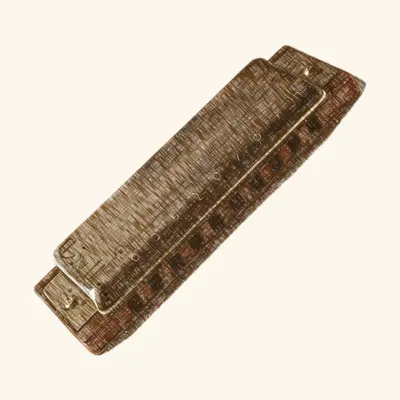 Harmonica
A small mouth instrument with metal reeds; you blow and draw air through its holes, and the 10-hole kind is often called a blues harp.
How it is built: A row of small holes sits on a thin box with a metal plate of tiny reeds inside. Air blown or drawn through a hole makes its reed shake back and forth, and that makes the note.
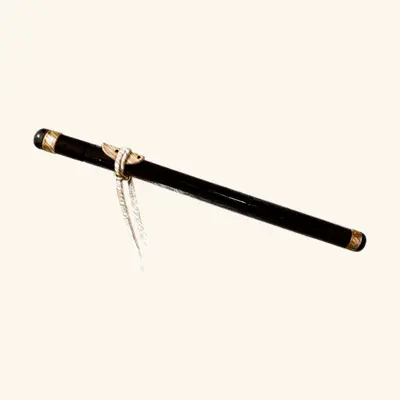 Native American flute
A flute of wood or cane with two air chambers and a soft, breathy sound; it is one of the best-known wind instruments of Native American music.
How it is built: The flute has two rooms inside. Your breath fills the first room, then a small block on top steers it through a narrow gap to a sharp edge that makes it sing. Finger holes change the note.
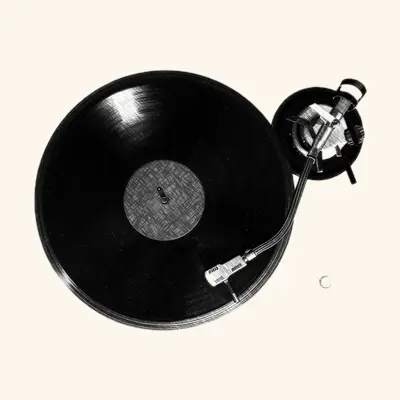 Turntables
Record players that hip-hop DJs use; DJ Kool Herc played the same short beat on two of them, back and forth, to make a longer dance break.
How it is built: A flat disc, called the platter, spins a record. A thin arm holds a tiny needle that rides in the record's wavy groove, and its wiggles are turned into electric sound.
Each picture is either a picture-book drawing or a simple diagram, not a photo. Small details are simplified.
How to listen
American styles often share a few simple patterns. Play one song three times and follow just one thing each time: the drums, the singer, then the part that makes you want to move.
- Listen for the backbeat
- In much rock and roll and R&B, the snare drum hits hardest on beats 2 and 4 of each bar, which makes you want to clap or nod along.
- Listen for swing
- In jazz, pairs of quick notes are often played long-short instead of evenly, which gives the music a bouncy, rolling feel.
- Listen for blue notes
- In blues and jazz, singers and players bend some notes slightly lower than usual, which makes the music sound expressive and a little sad.
Put on a rock or pop song and set the Sowlea metronome to its speed. Clap only on beats 2 and 4. Then try a swing drum rhythm and see how it feels different.
Listen: why it sounds different
A lot of American popular music grew from the blues, and you can hear it in a few small things. The blues scale (see the 12-bar blues section) adds an extra note, and blues melodies often let a flat note rub against the normal one, like E♭ leaning up to E. Under the tune, a piano left hand often repeats a short walking bass pattern, so the whole song rolls along on one groove.
The other big clue is swing. In much jazz and blues, each beat is split long-short instead of evenly, often close to two thirds and one third of the beat, though players stretch or tighten it with the speed. Play the same phrase both ways below: the straight one marches, the swung one bounces.
- The blues scale, going up once: listen for the extra note in the middle.
- A blues phrase with even notes: tidy, but a little stiff.
- The same phrase played long-short over a rolling boogie bass.
Blues singers and guitarists bend notes to places between the piano keys, and real swing is looser than these exact long-short notes, so the piano only comes close.
Big moments in the story of American music
- Around 1900Jazz takes shape in New Orleans
Brass bands, blues and ragtime mixed in New Orleans; the first jazz records were made in 1917.
- 1920Crazy Blues
Mamie Smith recorded it; it was one of the first blues records by an African American singer, and within a month about 75,000 copies had been bought.
- 1924Rhapsody in Blue
George Gershwin's piece, mixing concert music and jazz, was first played in New York on 12 February, and begins with a famous clarinet slide.
- 1925–1927Country music on the radio and on record
The radio show later named the Grand Ole Opry began in Nashville in 1925, and the Bristol sessions of 1927 recorded the Carter Family.
- 1943Oklahoma! changes Broadway
Richard Rodgers and Oscar Hammerstein II made a musical where the songs and dances helped tell the story.
- 1954Elvis records for Sun
Elvis Presley made his first big recording in Memphis in July, blending country, blues and gospel; rock and roll was soon booming.
- 1973Hip-hop begins in the Bronx
A party on 11 August, where DJ Kool Herc stretched the beats, is often called the birthday of hip-hop; "Rapper's Delight" became the first big rap hit in 1979.
- 2018A rapper wins the Pulitzer Prize
Kendrick Lamar's album DAMN. won the Pulitzer Prize for Music, the first time it went to someone outside classical and jazz.
Names to look up
These are only examples, not a ranking. Search for their names to listen to their music.
- Louis Armstrong
- Ella Fitzgerald
- Aaron Copland
- Elvis Presley
- Aretha Franklin
- Dolly Parton
- Michael Jackson
- Beyoncé
- Kendrick Lamar
- Taylor Swift
Meanwhile, around the world
While American music grew, here is what was happening in other places.
- 1824Beethoven's Ninth Symphony
In Vienna, a choir joined a symphony orchestra at the first performance on 7 May, long before blues and jazz took shape.
- 1889The Eiffel Tower opens
In Paris, the tower opened for the 1889 World's Fair, around the time the blues was growing in the American South.
- 1913The Rite of Spring
Stravinsky's ballet had its first performance in Paris on 29 May, with rhythms that shocked some of the audience, a few years before the first jazz records.
- 1962The Beatles' first single
"Love Me Do" came out in the UK on 5 October, as rock and roll music from the US was inspiring young bands there.
- 1982The first compact discs
CDs first went on sale in Japan late in the year, the same year Michael Jackson's Thriller came out.
- 2012Gangnam Style
The South Korean song became the first YouTube video to reach a billion views, showing how music could now travel around the world in days.
Hear the styles on this page
- Listen for the slow, bouncing long-short beat and the "blue" notes that slide up into the right note.
- Listen for the hand claps on beats 2 and 4, a call answered by a reply, and the "Amen" chords at the end.
- Listen to the left hand: a low note, then a chord, like a march, while the right-hand tune lands between the beats.
- Listen for the low notes only on beats 1 and 3, while the tune bounces long-short with plenty of surprises.
- Listen for the very strong snare on beats 2 and 4 and the short, saxophone-like riff.
- Listen for the even, driving piano notes and the strong snare on beats 2 and 4.
- Listen for the "boom-chick": a low note, then a chord, and little notes that slide into the tune.
- Listen for the "boom" of the kick and the "bap" of the snare under a short piano loop that repeats.
- Listen for the four chords going round and a short, catchy tune you could sing back right away.
- Listen for the snare hitting hard on beats 2 and 4, and a short guitar riff that keeps coming back.
How this page was checked: each fact was looked up again in the sources below — encyclopedias, museums, universities, cultural institutions and makers. Wikipedia was used only as a pointer, never as a source. It has not been reviewed by an outside music expert; if you spot a mistake, please tell us at support@sunsunlabs.com.
- Carnegie Hall, Timeline of African American Music: Rural/Folk Blues
- Carnegie Hall, Timeline of African American Music: Vaudeville/Classic Blues
- Carnegie Hall, Timeline of African American Music: Traditional Gospel
- Carnegie Hall, Timeline of African American Music: Rock 'n' Roll
- Carnegie Hall, Timeline of African American Music: Rap/Hip-Hop
- Carnegie Hall, Timeline of African American Music: Boogie-Woogie
- Tennessee Encyclopedia (Tennessee Historical Society): Grand Ole Opry
- Encyclopedia Virginia (Virginia Humanities): Bristol Sessions (1927)
- Graceland: Elvis History 1954–1957
- HISTORY.com: Hip-hop is born at a teen party in the Bronx
- PBS NewsHour: 2018 Pulitzer Prizes go to #metoo coverage, Kendrick Lamar and more
- Gershwin (official site): Rhapsody in Blue
- Rodgers & Hammerstein: Oklahoma!
- Aaron Copland (official site): Biography
- Leonard Bernstein (official site): About
- Boston University, BU Today: "Jingle Bells" History Takes Surprising Turn
- Smithsonian National Air and Space Museum: Tom Stafford's Jingle Bells and Wally Schirra's Harmonica
- Musical Instruments Museum Brussels (MIM): Alto saxophone
- University of Arkansas, Arkansas Archeological Survey: The Breckenridge Flute
Piano sound: Salamander Grand Piano by Alexander Holm (CC BY 3.0).