
Music of Brazil: three roots, one big carnival
Brazilian music grew from three kinds of music that met in one place: Indigenous, African and Portuguese. Out of that mix came samba, bossa nova, forró and many more sounds.
In this lesson
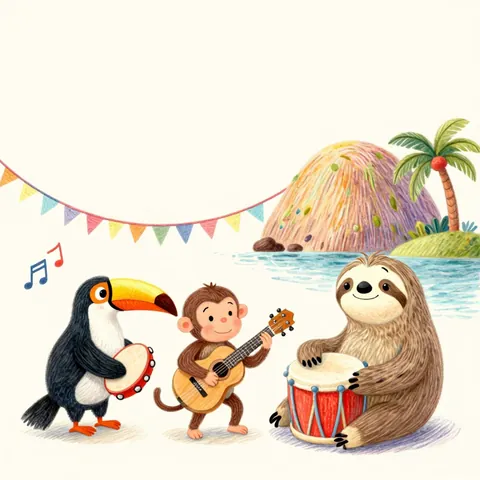
How Brazil sounds
Long ago, the people who already lived in the land had their own songs, rattles and flutes. Then people came from Portugal, bringing songs, guitar-like instruments and European melodies. Many people also came from Africa, and they brought drums, rhythms and call-and-answer singing. Mixed together over hundreds of years, these three roots made Brazilian music.
Samba is the sound many people think of first. A famous early song, "Pelo Telefone", was recorded around 1916 and came out in early 1917, and it was a hit at carnival. In 1928 the first "samba school" was founded in Rio de Janeiro. A samba school is really a big neighborhood group that sings, dances and plays together for the yearly carnival parade.
In the late 1950s a calm, quiet style called bossa nova appeared. Its name means something like "new trend". Singers use soft voices and gentle guitar. Later, in the late 1960s, Tropicália artists mixed Brazilian music with new sounds from around the world. Around the same time, a wide style called MPB (Música Popular Brasileira, "Brazilian popular music") grew, with thoughtful songs and many singer-songwriters.
Brazil has lively regional styles too. Forró comes from the Northeast and is played with an accordion, a big drum and a triangle. Axé began in the 1980s in Salvador, in the state of Bahia, and is a cheerful dance music for street parties. Funk carioca began in Rio de Janeiro in the 1980s as dance music with strong beats.
Bossa nova's guitar and chords
Bossa nova guitarists usually play a nylon-string guitar with their fingers, not a pick. João Gilberto copied a whole samba band with one hand: his thumb played like the deep bass drum, and his fingers played like the tamborims and bells.
Bossa nova also uses rich, unusual chords with extra notes and surprising turns, like those heard in jazz. Mixing samba rhythm with jazz-like chords is a big part of what makes bossa nova sound calm and dreamy.
The story of one circle and one parade
In a capoeira circle, called a roda, two people play a game of movement while everyone else claps and sings. A berimbau, a bow with a gourd, sets the rhythm and tells the players how fast to move.
Each samba school picks a theme for its yearly parade. Composers then write songs about that theme and compete, and the school's winning song is sung by thousands of people as they march.
Behind that song, a bateria of hundreds of drummers sets the pace. The deep surdo drums keep the beat steady, so the whole parade can move together.
Traditional instruments
Many Brazilian instruments are for rhythm, and most of them are small enough to carry in a parade.
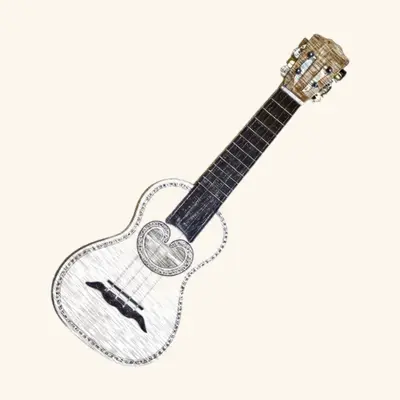 Cavaquinho
A small guitar-like instrument with four strings that came from Portugal; players strum it quickly with a pick to keep the rhythm in samba.
How it is built: The body is a small hollow wooden box like a mini guitar, with four strings, usually made of metal. The strings shake and the hollow body makes the sound louder.
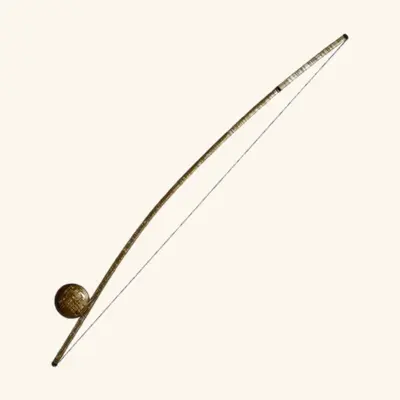 Berimbau
A long wooden bow with a wire and a hollow gourd; it is tapped with a small stick and is the main sound of capoeira, a Brazilian martial art with music.
How it is built: A long, bendy wooden stick is pulled into a bow by one steel wire. A hollow gourd tied near the bottom makes the twanging sound louder.
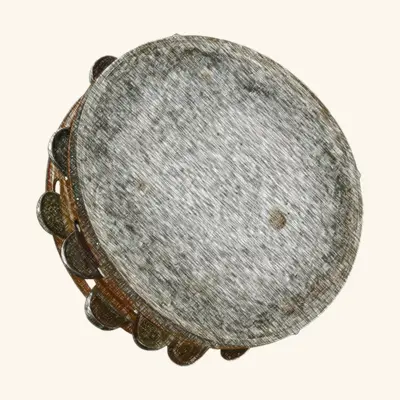 Pandeiro
A round hand drum with little metal jingles, like a tambourine, played with the fingers and palm.
How it is built: A thin round frame is covered with a tight drum skin. Pairs of small metal discs set into the rim jingle when you hit or shake it.
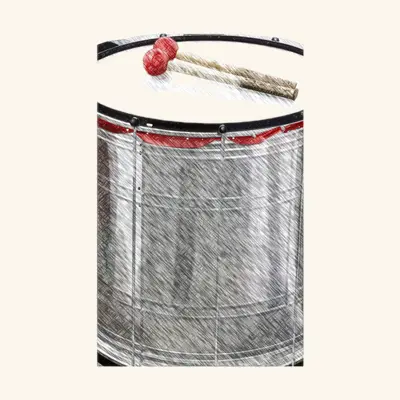 Surdo
A big, deep bass drum; in a samba band, the surdos keep the steady heartbeat that everyone else follows.
How it is built: A tall, wide metal or wooden barrel with a drum skin on each end. Hitting the top skin with a big soft stick makes the deep boom.
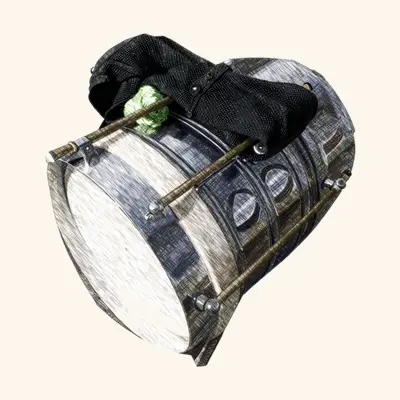 Cuíca
A small drum with a stick inside it; the player rubs the stick with a damp cloth to make squeaky, groaning sounds.
How it is built: It has a small open-bottom metal tube with one drum skin on top. A thin stick is fixed inside to the middle of the skin; rubbing it with a damp cloth makes the skin squeak.
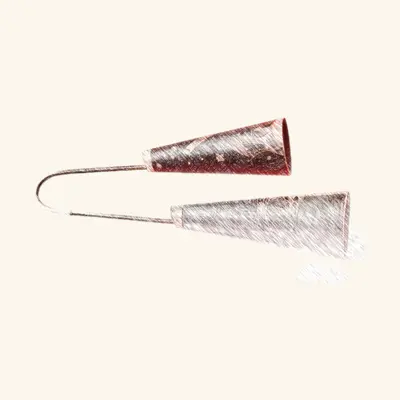 Agogô
Two metal bells joined together, each with a different pitch, struck with a stick; its name comes from the Yoruba language of West Africa.
How it is built: Two hollow metal cones of different sizes, open at the wide end, are joined by a curved metal arm that you hold. The bigger bell usually sounds lower.
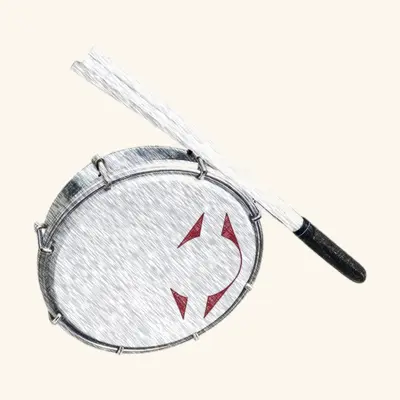 Tamborim
A very small, light drum held in one hand and hit quickly with a thin stick to make bright, snappy patterns.
How it is built: A small round frame, about 15 cm wide, is covered on one side with a tight skin. It has no jingles, so its sound is dry and sharp.
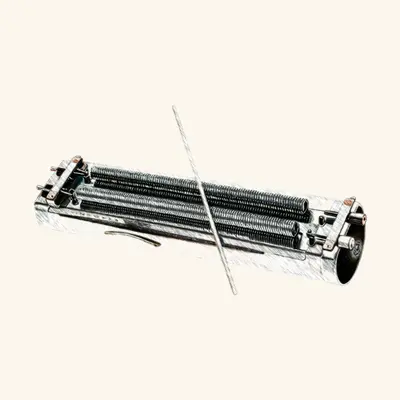 Reco-reco
A scraper with notches or metal springs; when you drag a stick across it, it makes a raspy, scratchy sound.
How it is built: A bamboo or wooden tube with many notches cut across it, or a metal tube with springs. Scraping a stick over the notches makes the rasping sound.
Each picture is either a picture-book drawing or a simple diagram, not a photo. Small details are simplified.
Inside a samba bateria
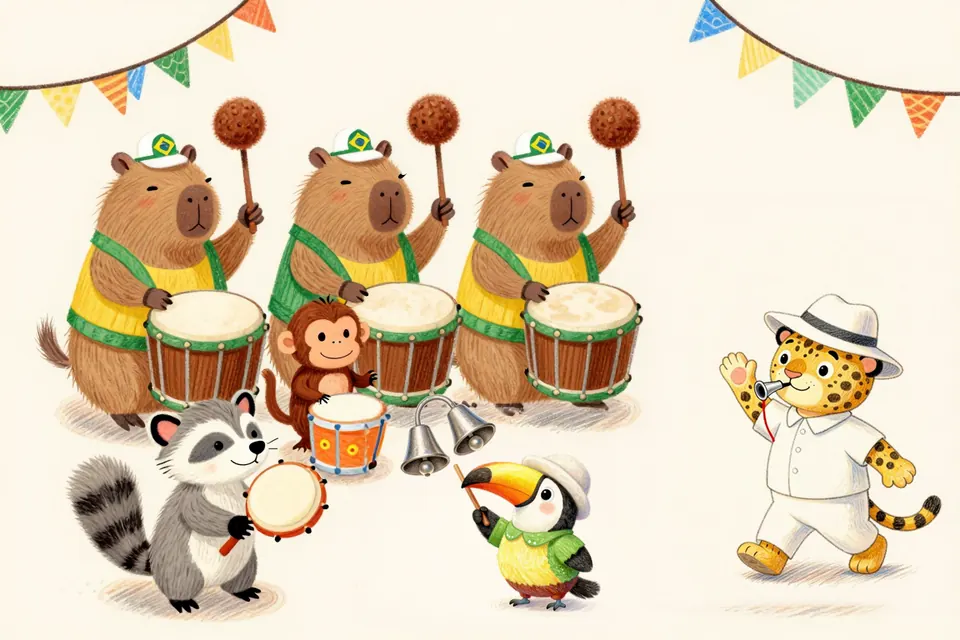
In a batucada, the whole drum group, the bateria, plays together, and each instrument has a job. The deep surdos give the low, steady beat, the high repinique plays sharp, quick patterns, and the leader blows a whistle called an apito to signal changes and stops.
On top, caixa snare drums, tamborins, agogô bells, chocalho shakers and squeaky cuícas add layers.
Set the metronome to a medium speed. Stamp on every click like a surdo, then tap quick, light notes on the table in between, like a tamborim. Can you keep both going?
How to listen
Brazilian music is full of rhythm layers. Try listening to one instrument at a time, then to all of them together.
- Listen for the off-beat push
- Samba is mostly counted in twos, and its rhythms often land between the main beats, which is called syncopation.
- Listen for call and response
- In samba and capoeira, a soloist sings a line and a group answers it.
- Listen for the quiet guitar
- In bossa nova, the guitarist plays a gentle, syncopated pattern that copies samba drums, and the singer stays soft.
Set the Sowlea metronome to a slow speed and clap on every click. Then clap just between the clicks. That in-between clapping is the feeling of syncopation.
Listen: why it sounds different
Brazilian music often sounds as if it is dancing a little ahead of the beat. That feeling is syncopation: many notes land between the beats instead of on them. In samba, usually counted in two, the deep surdo drum leans on the second beat, while the tamborim and the cavaquinho play jumpy patterns on top.
Bossa nova takes the same idea and makes it quiet. The guitarist’s thumb keeps a steady bass, while the fingers play soft chords off the beat. Those chords often have extra notes, like the ones in jazz, which gives them a dreamy color.
- The low notes lean on beat 2, while the chords and tune jump in between the beats.
- A steady thumb bass with soft, off-beat chords that have extra notes.
Real samba is played by drums such as the surdo and tamborim with the cavaquinho, and bossa nova on a nylon-string guitar; here the piano copies their rhythms.
Big moments in the story of Brazil's music
- From about 1500Three kinds of music meet
Portuguese people arrive, and over time Indigenous, Portuguese and African music begin to blend.
- 1899A carnival march
Chiquinha Gonzaga writes "Ô Abre Alas", often called the first carnival march.
- 1916–1917A famous early samba
"Pelo Telefone" is recorded and becomes a carnival hit; many people call it the first recorded samba.
- 1928The first samba school
Deixa Falar is founded in Rio de Janeiro, and Pixinguinha's band makes the first recording of "Carinhoso", a beloved choro he had written years earlier.
- 1930–1945Bachianas Brasileiras
Composer Heitor Villa-Lobos writes nine pieces that mix the style of Bach with Brazilian tunes.
- 1958Bossa nova arrives
João Gilberto records "Chega de Saudade", a song by Antônio Carlos Jobim and Vinicius de Moraes, and the quiet new style spreads.
- 1968Tropicália
A group of young artists releases the album "Tropicália: ou Panis et Circencis", mixing Brazilian music with new ideas.
- 1984The Sambadrome
A special street-stadium for samba school parades opens in Rio de Janeiro.
Names to look up
These are only examples, not a ranking. Search for their names to listen to their music.
- Pixinguinha
- Chiquinha Gonzaga
- Cartola
- Heitor Villa-Lobos
- Luiz Gonzaga
- João Gilberto
- Gal Costa
- Elis Regina
- Daniela Mercury
- Anitta
Meanwhile, around the world
Here is what was happening elsewhere around the same times.
- 1685Bach is born in Germany
While Portuguese and African music were mixing in Brazil, a future great European composer was born.
- 1895The first movie shows
The Lumière brothers in France show films to a paying crowd, just a few years before the first carnival march in Brazil.
- 1917The first jazz records
In the United States, a band makes some of the first jazz records, the same year samba's first hit came out.
- 1928Mickey Mouse cartoon with sound
"Steamboat Willie" shows in cinemas the same year the first samba school was founded.
- 1958A satellite for the United States
The United States launches its first satellite, Explorer 1, in the year bossa nova began.
- 1969People walk on the Moon
Apollo 11 lands on the Moon, a year after Tropicália's famous album.
Hear the styles on this page
- Listen for the low notes only on beats 1 and 3, while the tune bounces long-short with plenty of surprises.
- Listen for the low drum hitting harder on beat 2, while quick, jumpy patterns land between the beats.
- Listen for the calm, steady bass, the soft chords that slip in between the beats, and the extra notes that make the harmony sound dreamy.
- Listen for a rock drum beat mixed with Brazilian syncopation, and chords that move in surprising directions.
How this page was checked: each fact was looked up again in the sources below — encyclopedias, museums, universities, cultural institutions and makers. Wikipedia was used only as a pointer, never as a source. It has not been reviewed by an outside music expert; if you spot a mistake, please tell us at support@sunsunlabs.com.
- Britannica – Brazil: Performing arts (music, Carnaval, Sambadrome 1984)
- Agência Brasil – Primeira marchinha, primeiro samba: curiosidades do Carnaval
- Agência Brasil – Primeiro samba faz hoje 100 anos (Pelo Telefone)
- Britannica – Antônio Carlos Jobim
- Britannica – Bossa nova
- Smithsonian Magazine – Remembering bossa nova pioneer João Gilberto
- Britannica – Caetano Veloso / Tropicália
- Encyclopedia of Latin American History and Culture (encyclopedia.com) – MPB: Música Popular Brasileira
- Britannica – Heitor Villa-Lobos (Bachianas brasileiras)
- UFF Pensário – 1928: primeira gravação de Carinhoso
- Enciclopédia Itaú Cultural – Carinhoso
- UNESCO – Capoeira circle
- UNESCO – Samba de Roda of the Recôncavo of Bahia
- Grinnell College Musical Instrument Collection – Samba ensemble for Carnival
- Grinnell College Musical Instrument Collection – surdo / tamborim / cuica / pandeiro / reco-reco / agogô / berimbau / whistle
- The Met – Musical Bow (berimbau, capoeira)
- Buffalo Philharmonic Orchestra – Instruments of the World: Cavaquinho
- Agência Brasil – Iphan declares forró Brazil's cultural heritage
- Agência Brasil – Axé: ritmo que inovou o carnaval baiano completa 30 anos
- Agência Brasil – Funk muda vidas e movimenta economia (Funk Brasil 1989)
Piano sound: Salamander Grand Piano by Alexander Holm (CC BY 3.0).