
Music of Russia: from church choirs to ballet and rock
Russian music has folk songs played on triangle-shaped balalaikas, church choirs with no instruments at all, and ballets and symphonies that fill concert halls around the world. This page follows those sounds from old village tunes to modern bands.
In this lesson
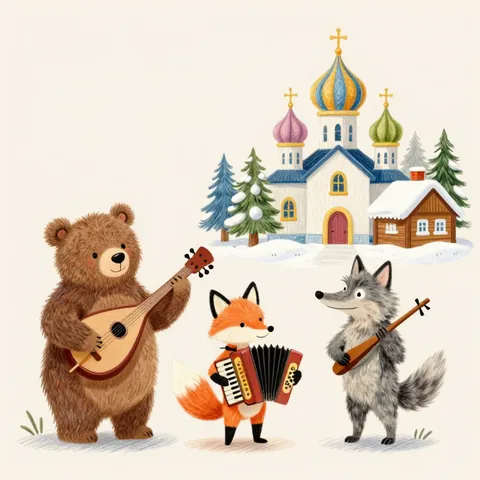
What does Russian music sound like?
Imagine a small triangle-shaped guitar with three strings, strummed fast until the notes shimmer like a tiny storm. That is the balalaika, and it is one of the best-known sounds of Russian folk music. Villagers also sang many songs, and short funny rhyming songs called chastushki were often sung with an accordion or a balalaika.
Church music has a very different feel. In the Russian Orthodox Church, voices sing without any instruments. An old style called znamenny chant has a single melody line, written with special hook-like signs instead of ordinary notes. Russian choirs are also famous for very deep bass singers, called oktavists, who sing some of the lowest notes a human voice can reach.
In the 1800s, composers began to build a Russian style of concert music. Mikhail Glinka wrote operas that used Russian tunes. Later, a group of five composers was nicknamed the Mighty Handful, and Pyotr Ilyich Tchaikovsky wrote ballets such as Swan Lake and The Nutcracker, which are still danced around the world. Mussorgsky wrote a piano suite called Pictures at an Exhibition, and Rimsky-Korsakov wrote Scheherazade and was famous for the colours he got from an orchestra.
In the 1900s, Rachmaninoff wrote piano music full of long, singing tunes, Stravinsky's ballet scores such as The Firebird and The Rite of Spring changed how rhythm was used, and Shostakovich wrote fifteen symphonies. Sofia Gubaidulina became a famous woman composer who even used the bayan accordion in some of her pieces. Rock bands like Kino arrived in the 1980s, and today Russian pianists and singers perform on stages all over the world.
What the Mighty Handful did
The Mighty Handful were five composers who worked together in Saint Petersburg, mostly in the 1860s: Balakirev, Cui, Mussorgsky, Rimsky-Korsakov and Borodin. Several had other jobs: Borodin was a chemist, Cui an army engineer and Rimsky-Korsakov a naval officer.
Instead of copying Western European music, they filled their music with Russian folk songs and stories, and with tunes from faraway places such as the Caucasus. They also used special scales, such as the whole-tone and pentatonic scales, to paint magic and faraway lands.
The story of one tale: Peter and the Wolf
In 1936, a children's theatre in Moscow asked a composer for a new piece. He wrote a musical tale with a narrator and an orchestra. It was made to help children learn the sounds of the instruments.
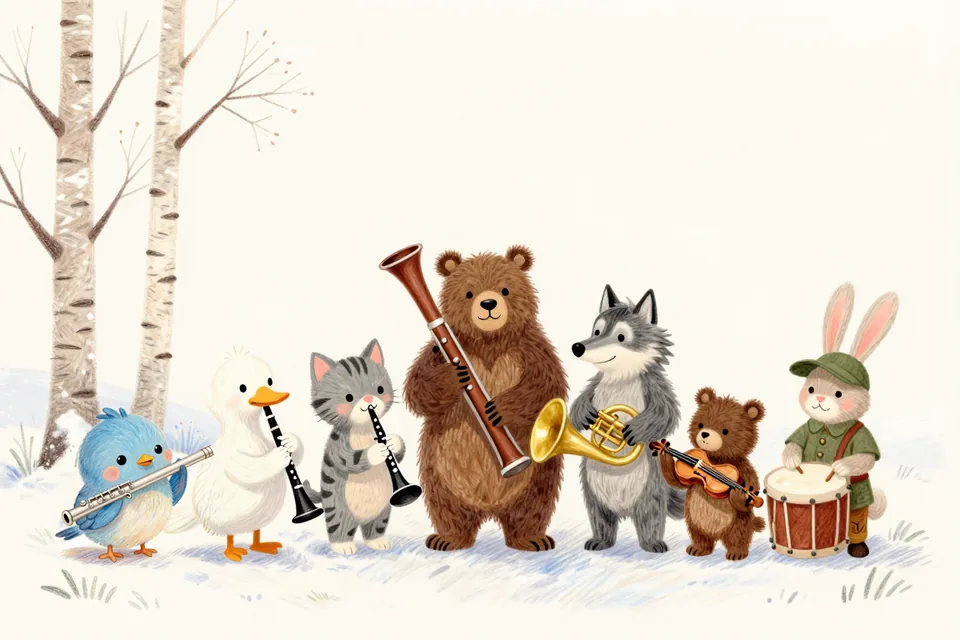
Every character has its own instrument. The bird is a flute, the duck is an oboe, and the cat is a clarinet playing short, springy notes. Grandfather is a bassoon, the wolf is three horns, and Peter is the string players.
The hunters' shots are drums. Listen once and you can point to each instrument by ear, like a game of musical hide-and-seek.
Traditional instruments
Here are some instruments you can look up and listen to.
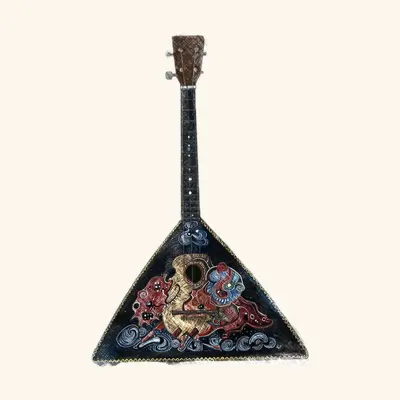 Balalaika
A plucked instrument with a triangle-shaped body and three strings; it comes in many sizes, from a small prima to a huge bass that stands on the floor.
How it is built: The hollow wooden body is a flat triangle with a spruce top and a back made of strips of maple glued together. Its three strings run over a long neck with metal frets.
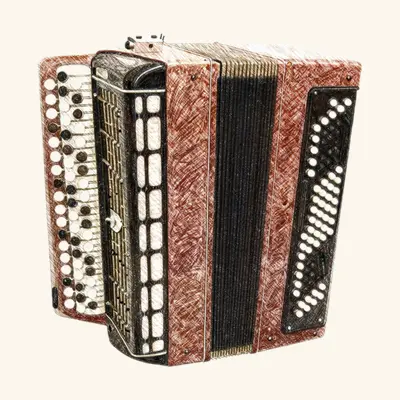 Bayan
A big button accordion with every note available on its buttons; it is named after an old singer-storyteller called Boyan and is loved by concert players.
How it is built: Squeezing the folding bellows pushes air past small metal reeds that buzz, and each button opens the air path to its own reeds.
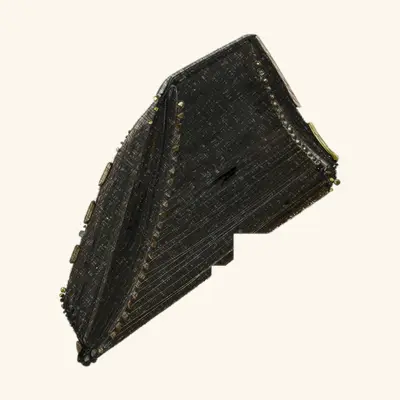 Gusli
A flat, many-stringed instrument, one of the oldest of Russia; the player plucks or strums its strings.
How it is built: It is a flat wooden sound box with strings stretched across the top, parallel to the wood. The wood makes the plucked strings louder.
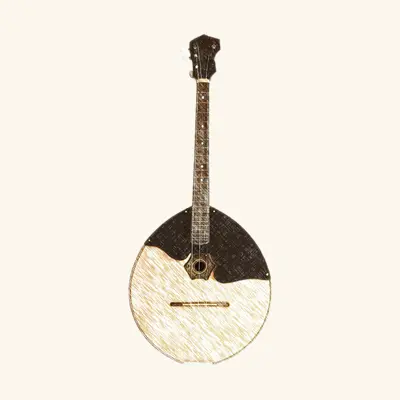 Domra
A round-bodied, long-necked plucked instrument with three or four metal strings, played in Russian folk orchestras.
How it is built: It has a round hollow wooden body and a long neck, with three or four metal strings. Plucking a string shakes the body, which makes the sound louder.
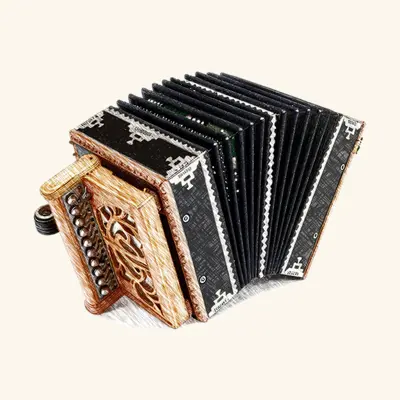 Garmon
A button accordion, often called a garmoshka, that village musicians use to accompany songs and dances.
How it is built: Like all accordions, it has metal reeds inside that buzz when the folding bellows push air through them. On some button accordions, one button plays a different note when the bellows are pushed than when pulled.
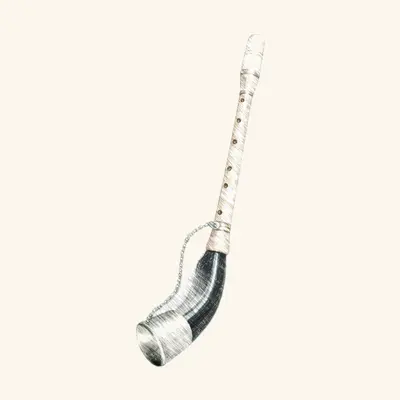 Zhaleika
A short wooden pipe with a single reed and a bell at the end, often made of cow horn; it has a bright, nasal sound.
How it is built: A short wooden pipe with finger holes. A reed buzzes when you blow, and the flared bell at the end is often made of cow horn.
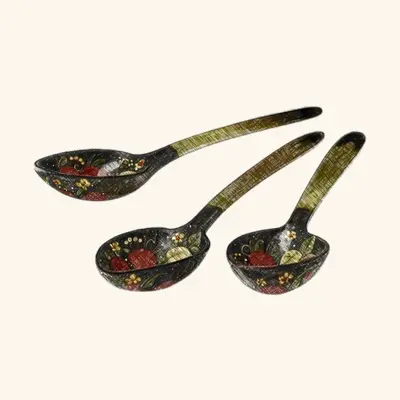 Wooden spoons
Real spoons clacked together in the hand to make a rhythm, played in folk bands and dances.
How it is built: They are ordinary wooden spoons with round bowls. The player knocks the spoons together, and the hard wood makes a sharp, clear knock.
Each picture is either a picture-book drawing or a simple diagram, not a photo. Small details are simplified.
Folk harmony and a famous choir piece
In Russian folk choirs, one voice often sings the main tune while other voices, called podgoloski, sing along above or below it. They support it, decorate it or answer it, and sometimes it is hard to tell which voice is the main tune.
In 1879 Yuly Melgunov published a book of these songs and described this way of singing. Later, collectors such as Yevgeniya Lineva recorded village choirs with a phonograph and wrote down every voice.
To hear a church choir with no instruments, try Rachmaninoff's All-Night Vigil, first sung in Moscow in 1915. It uses old Russian chants, including znamenny chant, and in one part the basses go down to the third B♭ below middle C.
How to listen
Russian music can be very different from piece to piece. Try these three clues when you listen.
- Listen for a shimmering strum
- The balalaika has a short sound that fades fast, so players strum or pluck very quickly to keep the music flowing.
- Listen for voices alone
- Znamenny chant is sung by many voices together on one melody, with no instruments at all.
- Listen for very low voices
- Some Russian church choirs have octavists, singers who can reach notes far below most other voices.
Set the metronome to a fast pace and clap along. Then say a silly four-line rhyme in time with the clicks, like a chastushka, which is a short, quick, funny song.
Listen: why it sounds different
Russian folk singing often sounds wide because of how the voices move. One voice carries the tune while extra voices called podgoloski wander away from it and come back; they often join again at the start and end of a phrase, and women's and men's voices may sing the same line an octave apart. The balalaika adds its own sparkle: its notes fade fast, so players strum quickly to keep the sound going.
Concert composers added scales of their own. Glinka used the whole-tone scale, where every step is the same size, for the evil sorcerer Chernomor in his opera Ruslan and Lyudmila, and Russian musicians still call it "Chernomor's scale". With no half steps, it has no home note to land on, so it sounds floating or spooky.
- Six equal steps from C up to C: no note feels like home.
- A Russian song made from an 1861 poem, with quick balalaika-style chords.
- Two voices start an octave apart, wander, then meet again at the end.
A balalaika strums much faster than these repeated chords, and folk choirs sing without any instruments, so the piano only gives the idea.
Big moments in the story of Russian music
- From the late 1000sChurch chant flourishes
Znamenny chant, sung by voices alone with its special hook-shaped signs, appears in church books from the late 1000s and later flourished in Novgorod and the Russian northwest.
- 1700sThe balalaika appears
The balalaika grew out of an older long-necked lute, the domra, and became popular with village musicians.
- 1836Glinka's opera
Mikhail Glinka's opera A Life for the Tsar was a big success; he is often called the starting point of Russian classical music.
- 1877Swan Lake at the Bolshoi
Tchaikovsky's ballet Swan Lake was first shown at the Bolshoi Theatre in Moscow in March.
- 1880sThe balalaika joins an orchestra
The musician Vasily Andreyev improved the balalaika and arranged folk tunes for balalaika orchestras.
- 1913The Rite of Spring
Stravinsky's ballet had its first show in Paris in May, with rhythms so wild that the audience made a big commotion.
- 1958The Tchaikovsky Competition begins
A music contest for young pianists and violinists began in Moscow; singers and other instruments were added later.
- 1981Kino forms
The rock band Kino, led by Viktor Tsoi, started in the city of Leningrad, now called Saint Petersburg.
Names to look up
These are only examples, not a ranking. Search for their names to listen to their music.
- Pyotr Ilyich Tchaikovsky
- Modest Mussorgsky
- Nikolai Rimsky-Korsakov
- Sergei Rachmaninoff
- Igor Stravinsky
- Dmitri Shostakovich
- Sofia Gubaidulina
- Kino
- Daniil Trifonov
Meanwhile, around the world
While Russian music grew, here is what was happening in other places.
- 1163Notre-Dame begins
In Paris, builders began the great cathedral of Notre-Dame, while znamenny chant was already being sung in Russian churches.
- 1839Photography goes public
In France, the daguerreotype process was explained to the public in August, a few years after Glinka's first big opera.
- 1877The phonograph
Thomas Edison announced his sound-recording machine in November, the same year Swan Lake was first shown.
- 1889The Eiffel Tower is finished
In Paris, a 300-metre iron tower was completed for a World's Fair, in the years when balalaika orchestras were forming.
- 1981The IBM PC
IBM released its first personal computer in August, the same year the band Kino began.
Hear the styles on this page
- Listen for one clashing chord hammered again and again, with loud accents that land where you do not expect them.
- Listen for the snare hitting hard on beats 2 and 4, and a short guitar riff that keeps coming back.
How this page was checked: each fact was looked up again in the sources below — encyclopedias, museums, universities, cultural institutions and makers. Wikipedia was used only as a pointer, never as a source. It has not been reviewed by an outside music expert; if you spot a mistake, please tell us at support@sunsunlabs.com.
- Encyclopaedia Britannica — The Five (Russian composers)
- Encyclopaedia Britannica — Balalaika
- Encyclopaedia Britannica — Mikhail Glinka
- Encyclopaedia Britannica — The Rite of Spring
- Encyclopaedia Britannica — César Cui
- Encyclopaedia Britannica — Aleksandr Borodin
- Encyclopaedia Britannica — Nikolay Rimsky-Korsakov
- Encyclopaedia Britannica — Modest Mussorgsky
- Encyclopaedia Britannica — Dmitri Shostakovich
- Encyclopaedia Britannica — Psaltery (Russian gusli)
- Encyclopaedia Britannica — Accordion
- Encyclopaedia Britannica — Hornpipe (musical instrument)
- Smithsonian Folklife Festival — Margarita Mazo, Song in Rural Russia (1988)
- University of Kansas CREES — Balalaika
- University of Kansas CREES — Garmon & Bayan
- University of Kansas CREES — Domra
- Grinnell College Musical Instrument Collection — Balalaika
- International Research Center for Traditional Polyphony (Tbilisi State Conservatoire) — Russian polyphony
- International Tchaikovsky Competition — About
- Cappella Amsterdam — Rachmaninoff's Vespers
Piano sound: Salamander Grand Piano by Alexander Holm (CC BY 3.0).