
Woodwind instruments: playing with air
If you blow across the top of an empty bottle, you get a note. That is the idea behind all woodwind instruments: a column of air inside a tube is made to shake, and the player changes the note by changing the length of the tube.
In this lesson

A tube full of shaking air
Inside a woodwind there is a tube. When air in the tube shakes, you hear a note. A long tube makes a low note, and a short tube makes a high one.
Woodwinds have holes along the tube, covered by fingers or by little metal keys. Opening a hole is like making the tube shorter, so the note goes up. Closing the holes again makes the tube long, and the note goes down.
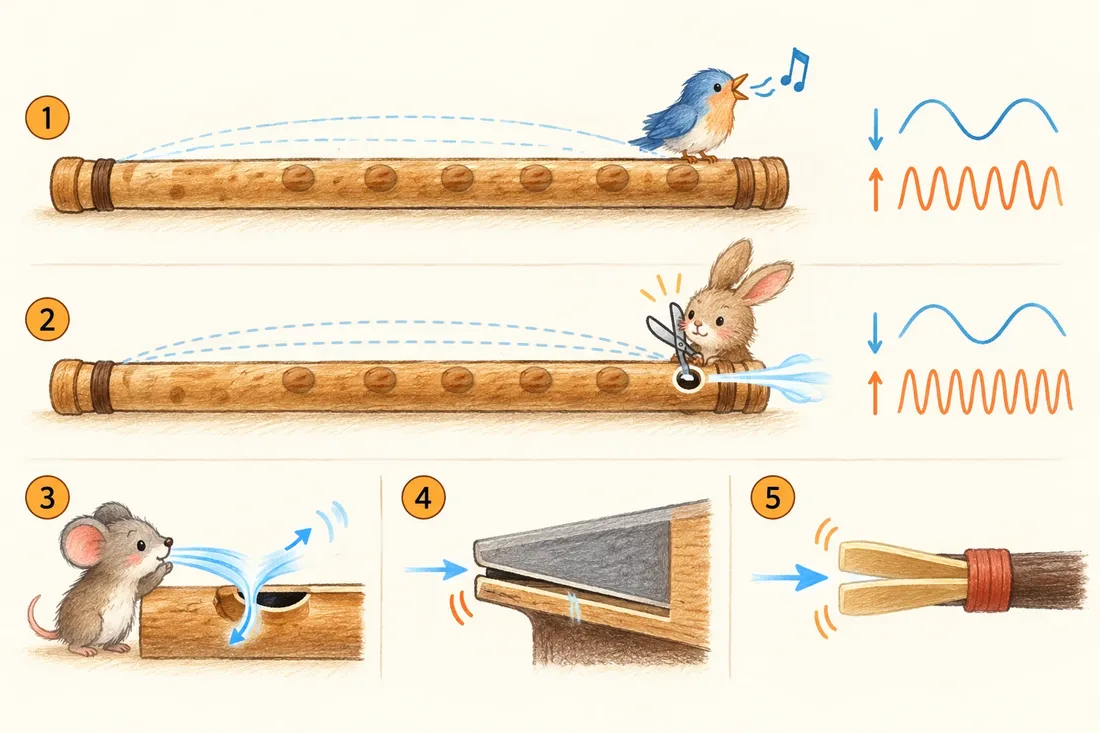
- All holes covered: the whole tube vibrates, it is at its longest and the note is lowest
- Open the lowest hole: the air escapes there, as if the tube were cut shorter, so the note goes up
- Flute: the airstream hits the edge of the mouth hole and flips in and out
- Clarinet: one reed beats quickly against the mouthpiece
- Oboe: two reeds beat against each other
Three ways to start the shaking
A woodwind player starts the air shaking in one of three ways. The flute and the recorder use an edge. The clarinet and the saxophone use one reed. The oboe and the bassoon use two reeds. A reed is a thin piece of cane that buzzes when you blow past it.
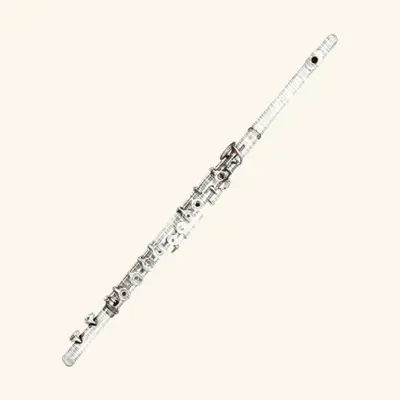 Flute
The player blows across a hole, like across a bottle. Mostly made of metal today. The tiny piccolo is its high little cousin.
How it is built: The tube is closed at the top end and has a small hole near it. Air splits on the hole's edge, and keys cover the other holes down the tube.
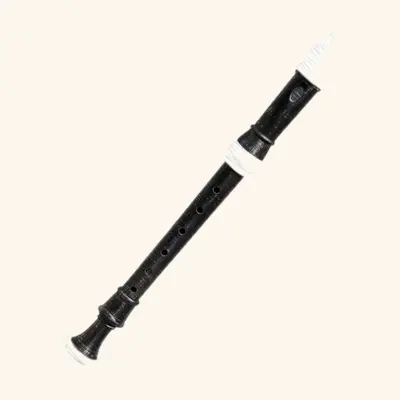 Recorder
A simple whistle-like flute, often the first instrument children learn at school.
How it is built: You blow into a narrow channel that aims air at a sharp edge. Seven finger holes sit on the front and one thumb hole on the back, and it usually comes apart in three pieces.
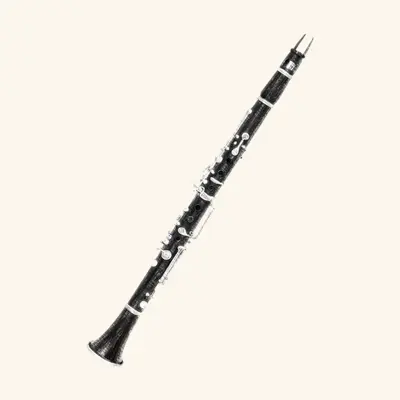 Clarinet
One reed on a mouthpiece. A warm, smooth sound that can play very high and very low.
How it is built: The reed is held on the mouthpiece by a metal clamp called a ligature. The tube is mostly the same width all the way down, then flares into a bell; it is often made of dark African blackwood.
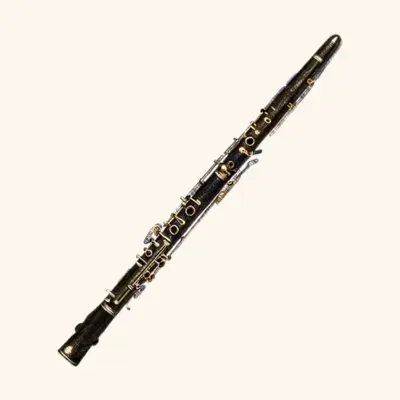 Oboe
Two reeds tied together. A clear, singing sound. In many orchestras the oboe plays the note everyone tunes to.
How it is built: The two reed blades are tied on a small metal tube, and the body is slim and cone-shaped, wider at the bottom. It is often made of dark wood, with many silver keys.
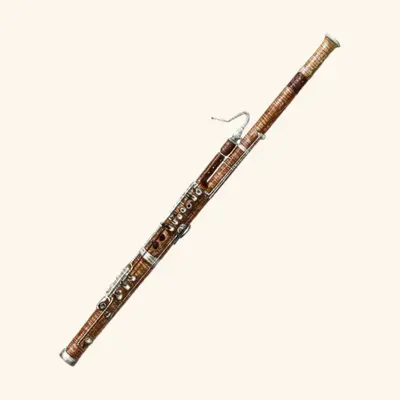 Bassoon
A very long tube folded in half, with two reeds on a curved metal pipe. A deep, funny, rich sound.
How it is built: The sound travels about 2.5 meters of cone-shaped wooden tube folded in two, joined by a U-shaped metal piece at the bottom. The pipe that holds the reed is called the bocal.
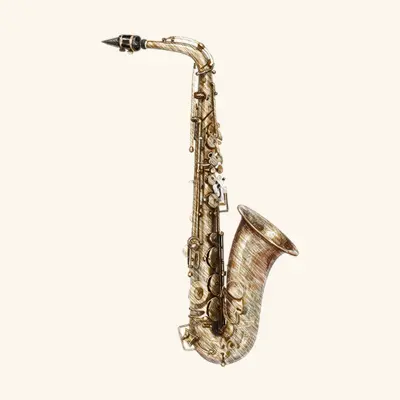 Saxophone
One reed, but a curved metal body. Invented by Adolphe Sax in the 1840s (he patented it in 1846) and loved in jazz.
How it is built: The cone-shaped body is usually brass, with a curved neck at the top and a U-shaped bend at the bottom. Round pads on keys cover holes along the body.
Each picture is either a picture-book drawing or a simple diagram, not a photo. Small details are simplified.
Why "wood" winds if they are metal?
Flutes and saxophones are made of metal today, so why are they called woodwinds? Because the family is named for how it works, not for the material. Long ago, flutes were made of wood, and a saxophone uses a reed made of cane.
Piano sound: Salamander Grand Piano by Alexander Holm (CC BY 3.0).