
Keyboard instruments: piano, organ and more
A keyboard is not one instrument but a clever way to play many instruments with the same row of keys. The keys look the same on a piano, an organ and a synthesizer. What is hidden behind the keys is completely different.
In this lesson

The piano: hammers and strings
When you press a piano key, a little felt hammer hits a string inside. The string shakes, and a big wooden board under it makes the sound louder. Let go of the key and a soft pad stops the string.
A full piano has 88 keys, and every key has its own string (or a few strings together). The low keys have long, thick strings. The high keys have short, thin ones.
The piano can play soft or loud depending on how hard you press the key. Its full old name, pianoforte, means "soft-loud" in Italian. It was invented in Italy around the year 1700.
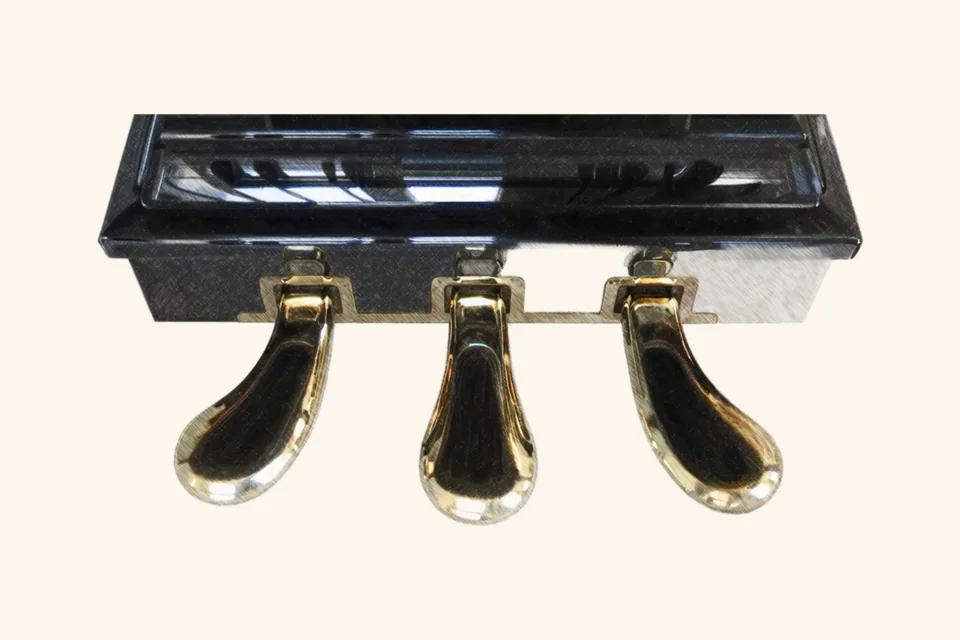
The pedals
A piano usually has two or three pedals worked by the feet. The right pedal lets the notes ring on after you lift your fingers. The left pedal makes the sound softer. Using the pedal well is a big part of playing the piano.
Other keyboards
The same keys can control very different machines.
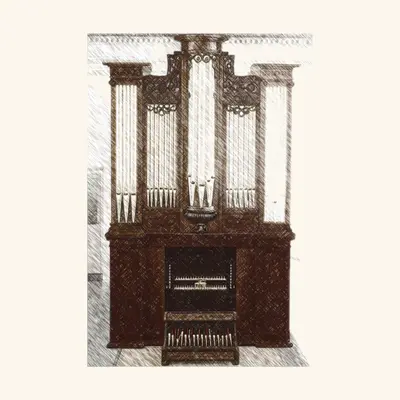 Organ
Pressing a key lets air flow into a pipe. A big pipe organ in a church can have thousands of pipes and uses hands and feet.
How it is built: Pipes are made of metal or wood; some work like a giant recorder, others like a clarinet. Players use several keyboards plus a foot pedalboard, and stops choose which pipes sound.
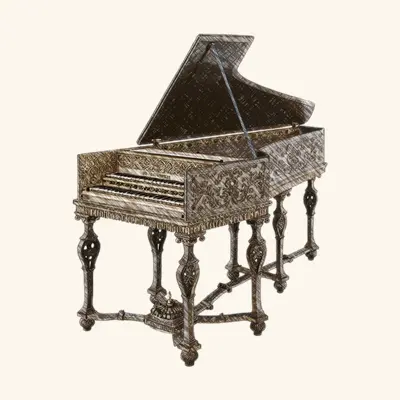 Harpsichord
Pressing a key makes a tiny pick pluck a string. It is the sparkling sound of music from the Baroque times. It always plays at nearly the same loudness, however hard you press.
How it is built: In a wing-shaped wooden case, each key lifts a thin wooden jack that holds a quill or plastic pick. A wooden soundboard makes the plucked strings louder.
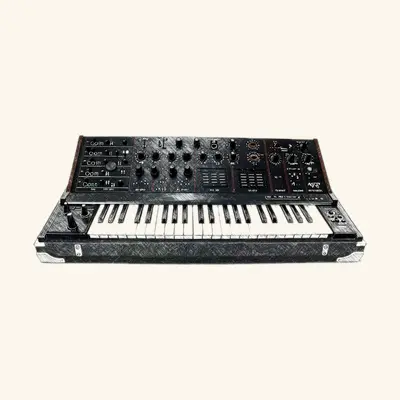 Synthesizer
Electronic circuits make the vibrations, and the keys tell them which notes to play. A synthesizer can imitate other instruments or make completely new sounds.
How it is built: Inside are oscillators that make simple waves, filters that change the sound, and envelopes that shape how a note starts and fades. Knobs and sliders adjust them.
Each picture is either a picture-book drawing or a simple diagram, not a photo. Small details are simplified.
Piano sound: Salamander Grand Piano by Alexander Holm (CC BY 3.0).