
Brass instruments: buzzing lips and shiny tubes
Press your lips together and blow a raspberry. That buzzing is exactly how a trumpet starts its sound. The brass family is a group of metal tubes that make a buzz big, bright and powerful.
In this lesson
The buzz
A brass player presses their lips against a cup-shaped metal mouthpiece and blows so that the lips buzz. The long metal tube then makes the small buzz much louder and gives it its colour.
Tightening the lips makes the buzz higher, and loosening them makes it lower. With only lip changes, a brass instrument can already play a handful of notes.
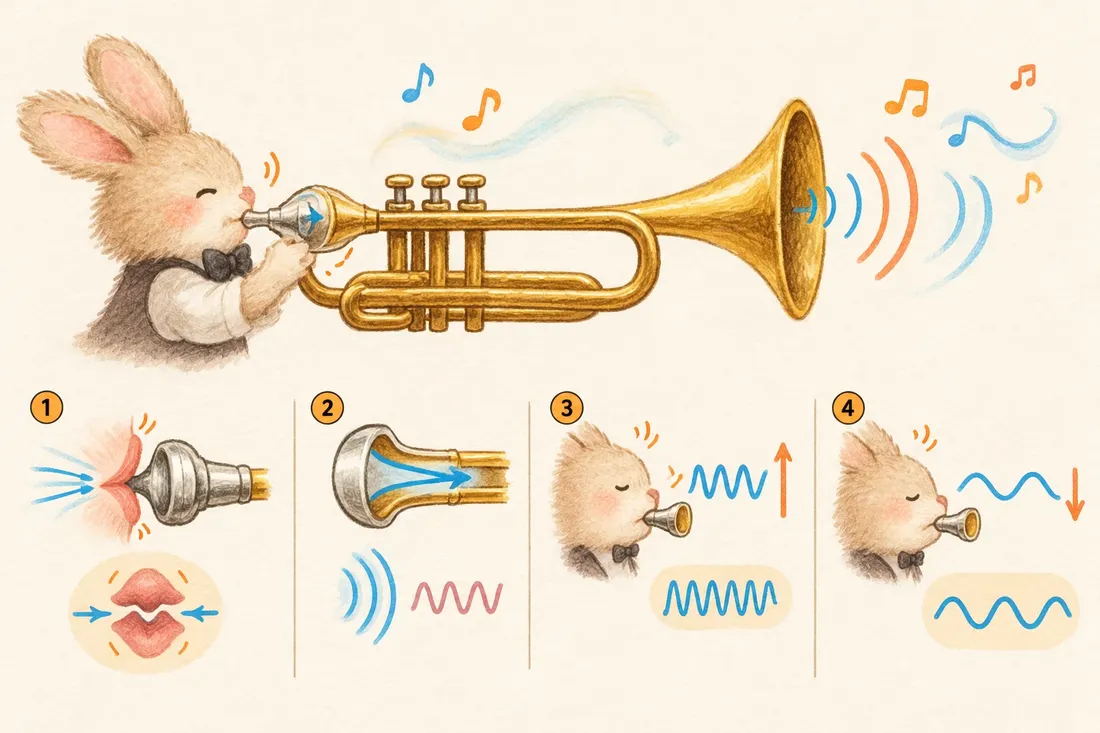
- The lips press against the mouthpiece and the air makes them flap open and shut: a buzz
- The cup mouthpiece: a little bowl that feeds the buzz into the tube
- Tight lips vibrate faster: a higher note
- Relaxed lips vibrate slower: a lower note
Making the tube longer
To play all the notes in between, brass instruments change the length of the tube. A trombone has a slide that the player pushes in and out. Trumpets, horns and tubas have valves: pressing a valve sends the air through an extra loop of tube, making it longer, so the note goes lower.
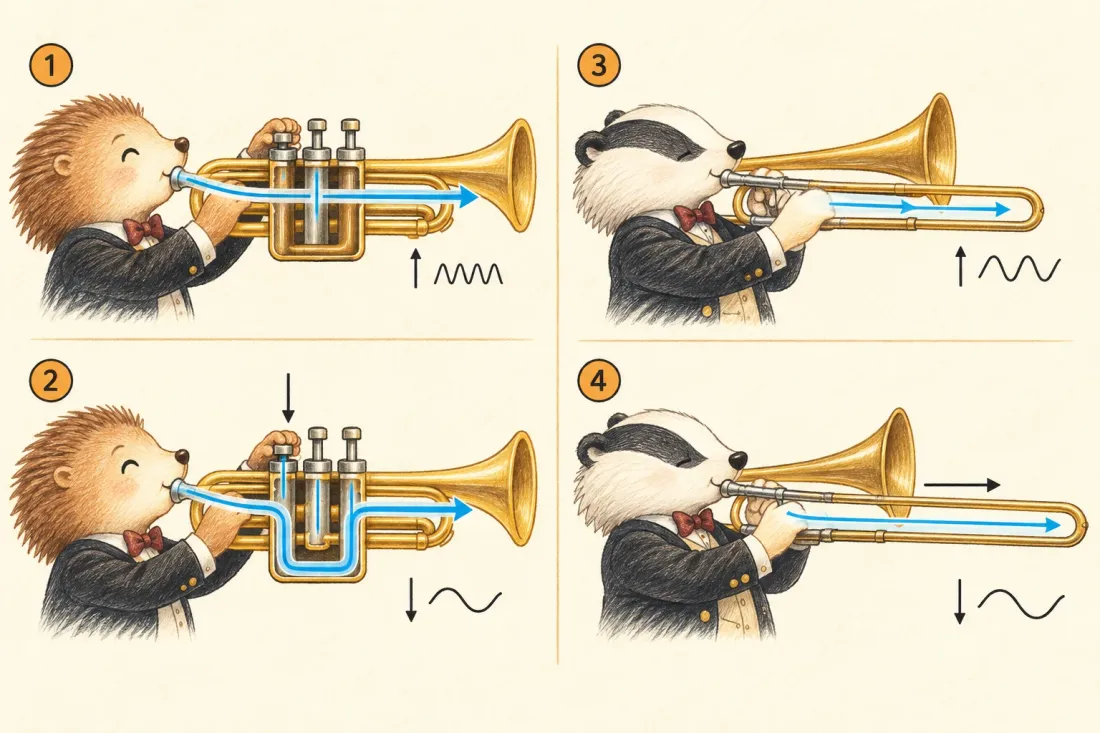
- Valve up: the air goes straight through, the tube is shorter and the note higher
- Valve pressed: the air takes an extra loop, the tube is longer and the note lower
- Slide in: the shortest tube and the highest note
- Slide out: the air has farther to travel, so the note is lower
The family
Brass instruments come in different sizes, from small and high to huge and low.
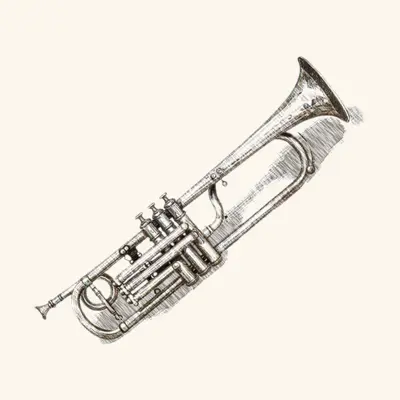 Trumpet
The smallest and highest of these four, with a bright, shining sound. Usually three valves.
How it is built: A brass tube about 1.5 meters long is bent twice into a loop. Buzzing your lips in the mouthpiece makes the air inside vibrate, and the bell makes it louder.
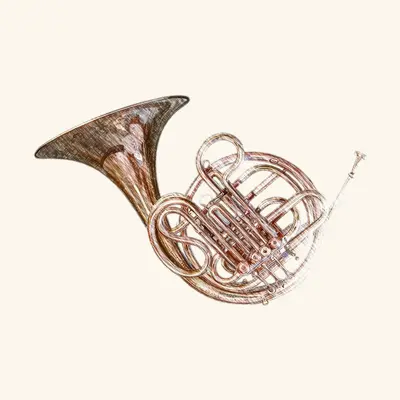 French horn
A long tube coiled into a round shape, with a mellow, warm sound. The player puts a hand inside the wide end.
How it is built: Its brass tube is much longer than a trumpet's and is wound into a circle. Valves change the note, and the bell points backward, which helps give a softer sound.
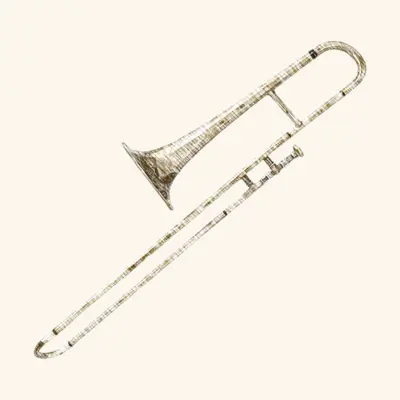 Trombone
The only one of these four with a slide instead of valves, so it can glide smoothly from note to note.
How it is built: The slide has two tubes that glide inside two others. Pulling it out makes the tube longer and the note lower. There are seven main slide positions.
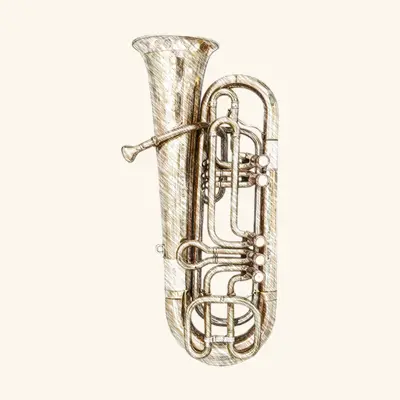 Tuba
The biggest and lowest of these four, with a deep, round sound. It holds the bottom of the band.
How it is built: A wide, cone-shaped brass tube widens into a huge bell. It usually has four or five valves, and its mouthpiece is much bigger than a trumpet's.
Each picture is either a picture-book drawing or a simple diagram, not a photo. Small details are simplified.
Why "brass"?
The family is called brass because these instruments are traditionally made of brass, a shiny yellow metal. A trumpet can be silver in colour too, and it is still brass in the music world, because of how it makes its sound.
Piano sound: Salamander Grand Piano by Alexander Holm (CC BY 3.0).