
Baroque: ornaments, opera and the harpsichord
Think of a building full of golden curls, painted ceilings and statues. The music of the Baroque era, about 1600 to 1750, has the same love of decoration and drama.
In this lesson
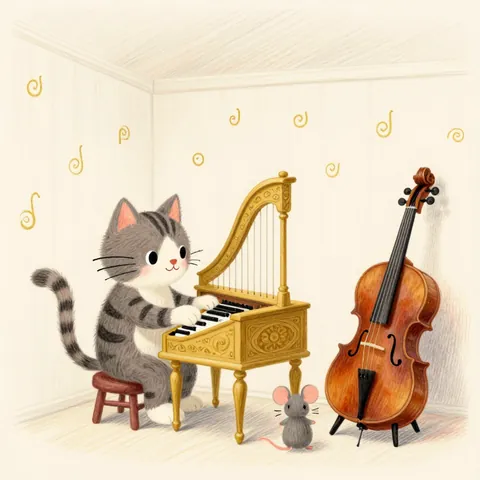
What does "Baroque" mean?
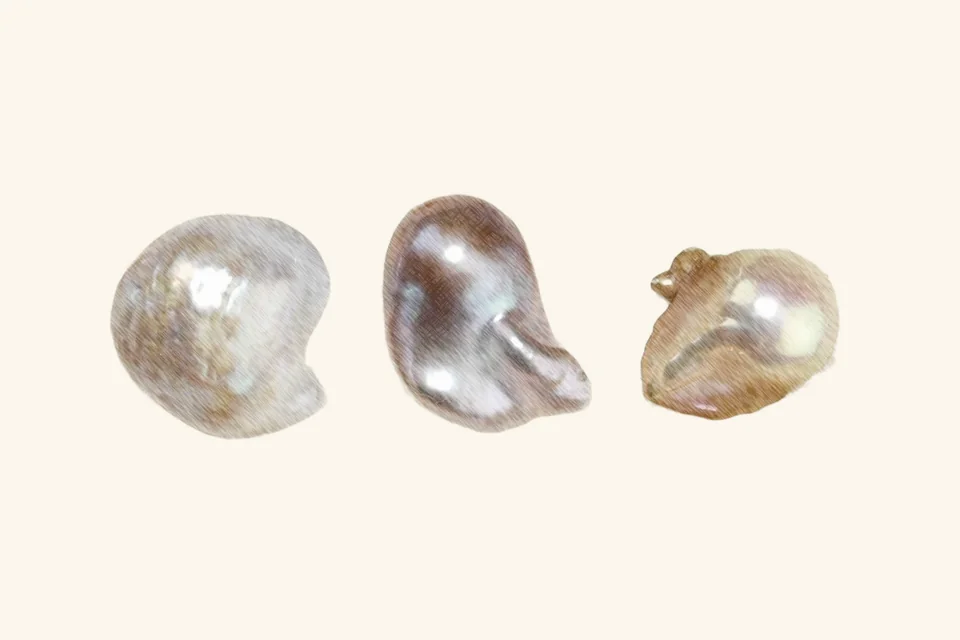
One idea is that the word comes from a Portuguese word for a pearl with an uneven shape. At first it meant "strange" or "odd". Today it is the name for the art, buildings and music of that time.
How Baroque music sounds
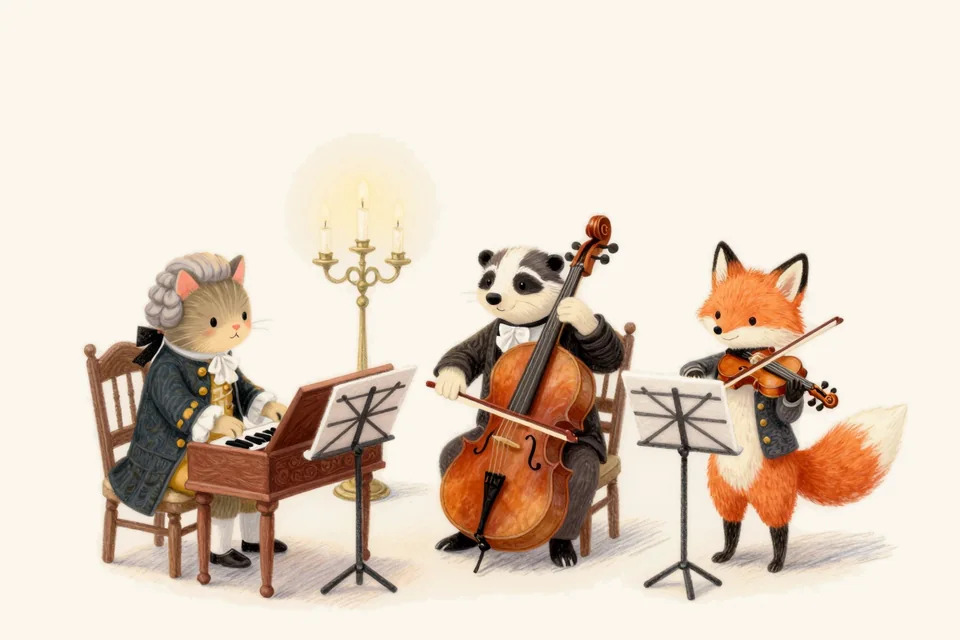
Baroque tunes are often decorated with quick little twirls called ornaments. Underneath, a strong bass line, often played by a harpsichord or an organ together with a cello or another low instrument, holds everything together. This is called the basso continuo.
Baroque music loves contrast. A group of players may suddenly be soft, then loud, then soft again, like steps going up and down.
The first operas
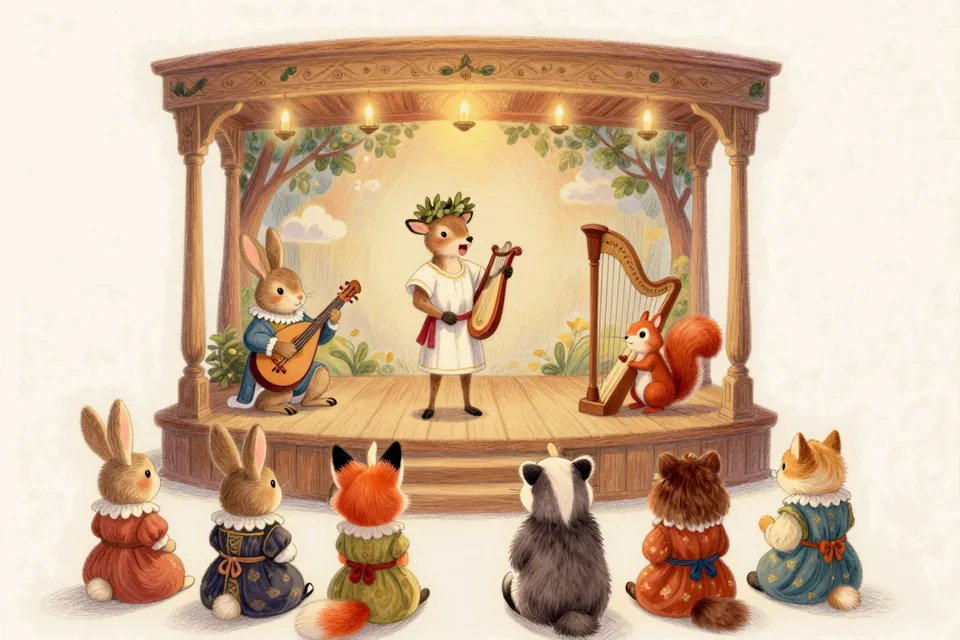
Opera, a play in which the story is told mostly through singing, began in Italy around the year 1600. One of the first great operas still performed today is L'Orfeo by Claudio Monteverdi, which was first performed in 1607 in the Italian city of Mantua.
Famous Baroque composers
These composers lived in Europe, and many of their pieces are still played today.
- Antonio Vivaldi (1678–1741)
- A violinist and priest from Venice. He wrote hundreds of concertos, including The Four Seasons.
- Johann Sebastian Bach (1685–1750)
- A German organist and composer who wove several melodies together in a clever way.
- George Frideric Handel (1685–1759)
- Born in Germany, he lived in London and wrote operas and the oratorio Messiah, first performed in Dublin in 1742.
- Henry Purcell (about 1659–1695)
- An English composer who wrote music for the theatre, including an opera called Dido and Aeneas.
How this page was checked: each fact was looked up again in the sources below — encyclopedias, museums, universities, cultural institutions and makers. Wikipedia was used only as a pointer, never as a source. It has not been reviewed by an outside music expert; if you spot a mistake, please tell us at support@sunsunlabs.com.
- Britannica — Baroque music
- Britannica — Western music: The tonal era and after (The Baroque era, Opera)
- Britannica — Baroque art and architecture (origin of the term)
- Britannica — basso continuo
- Britannica — opera
- Britannica — Claudio Monteverdi
- Opéra national du Rhin — L'Orfeo (premiere at the Ducal Palace, Mantua, 1607)
- Britannica — Antonio Vivaldi
- Britannica — Johann Sebastian Bach
- Britannica — counterpoint
- Britannica — George Frideric Handel
- Britannica — Henry Purcell
- Oak National Academy — The Baroque period (lesson)
Piano sound: Salamander Grand Piano by Alexander Holm (CC BY 3.0).