
The Classical era: clear, balanced and elegant
After the decorated Baroque style, music became cleaner and lighter, like a tidy garden after a thick forest. This is the Classical era, about 1750 to 1820.
In this lesson
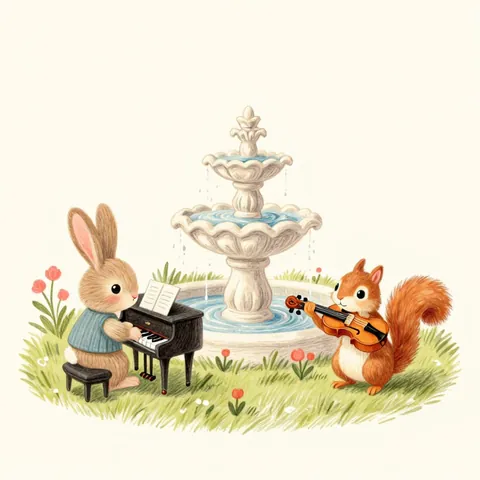
Two meanings of "classical"
In everyday life, people say "classical music" for a whole tradition of concert music, from long ago to today. But musicians also use the word Classical, with a capital C, for one short period: about 1750 to 1820. This lesson is about that period.
How Classical music sounds
Classical melodies are usually clear and easy to sing. They come in neat, balanced phrases, like a question and an answer. The accompaniment is simpler than in the Baroque, and the music moves smoothly between soft and loud.
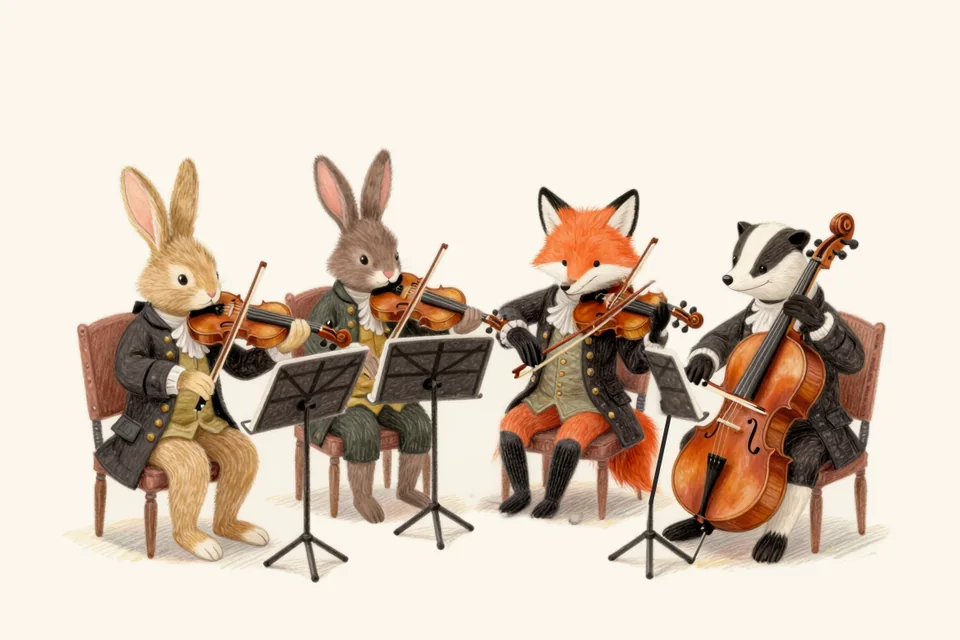
In this era, composers also wrote in shapes that stayed popular: the symphony for a full orchestra, the sonata for one or two instruments, and the string quartet for two violins, a viola and a cello. The modern orchestra started to take shape, and the piano slowly took over from the harpsichord.
Vienna, the music capital
Many of the most famous Classical composers lived or worked in the city of Vienna, in Austria. Rich families, the court and the theatres wanted music, so composers found work and audiences there.
Famous Classical composers
Three names stand out.
- Joseph Haydn (1732–1809)
- An Austrian composer who wrote more than a hundred symphonies. He is often called the father of the symphony.
- Wolfgang Amadeus Mozart (1756–1791)
- A child prodigy from Salzburg who wrote symphonies, operas, concertos and chamber music before he died at 35.
- Ludwig van Beethoven (1770–1827)
- Born in Bonn, Germany, he moved to Vienna and wrote music that bridges the Classical and the Romantic eras.
How this page was checked: each fact was looked up again in the sources below — encyclopedias, museums, universities, cultural institutions and makers. Wikipedia was used only as a pointer, never as a source. It has not been reviewed by an outside music expert; if you spot a mistake, please tell us at support@sunsunlabs.com.
- Britannica — Classical music (Classical period 1750–1820)
- Britannica — Western music: The Classical period
- Britannica — Western music: Sonata form, chamber music and the keyboard sonata
- Oak National Academy — The Classical period (lesson)
- Britannica — harpsichord (decline in favour of the pianoforte)
- Britannica — Vienna
- Britannica — Joseph Haydn
- National Arts Centre (Canada) — Franz Joseph Haydn
- Classic FM — Haydn: best pieces
- Britannica — Wolfgang Amadeus Mozart
- Britannica — Ludwig van Beethoven
Piano sound: Salamander Grand Piano by Alexander Holm (CC BY 3.0).