
Ludwig van Beethoven: music that is brave and strong
Ludwig van Beethoven wrote music that can be stormy, tender and brave. When he began to lose his hearing as a young man, he did not stop. He kept writing great music for the rest of his life.
In this lesson
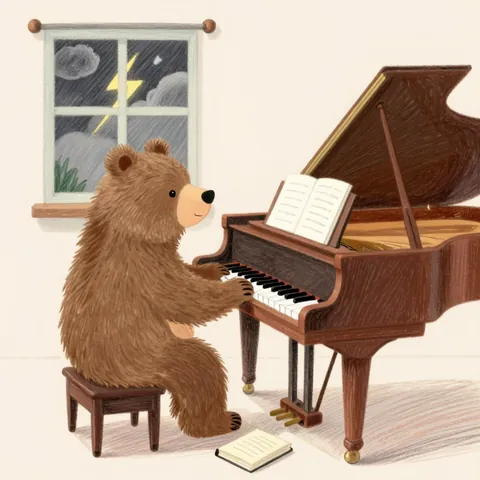
From Bonn to Vienna
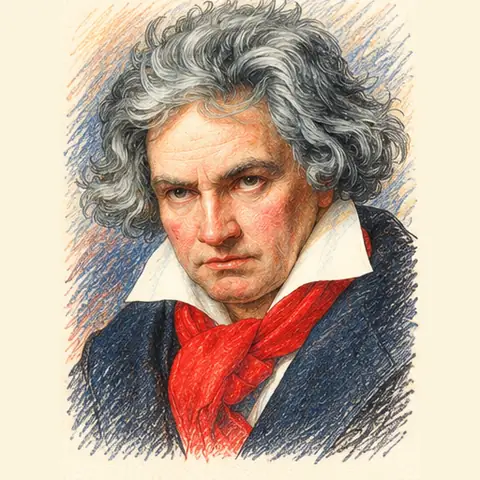
Beethoven was born in Bonn, Germany, and was baptised in December 1770. His father was a court singer who hoped he would become a famous child performer, like Mozart. Beethoven moved to Vienna as a young man and became well known as a pianist and a composer.
A turning point
In 1802 Beethoven stayed for a few months in Heiligenstadt, a town near Vienna. His hearing was getting worse, and he felt very sad about it.
On 6 October that year he wrote a long letter to his brothers. He never sent it. People found it after he died in 1827. In it, he says he wants to keep going and finish his music.
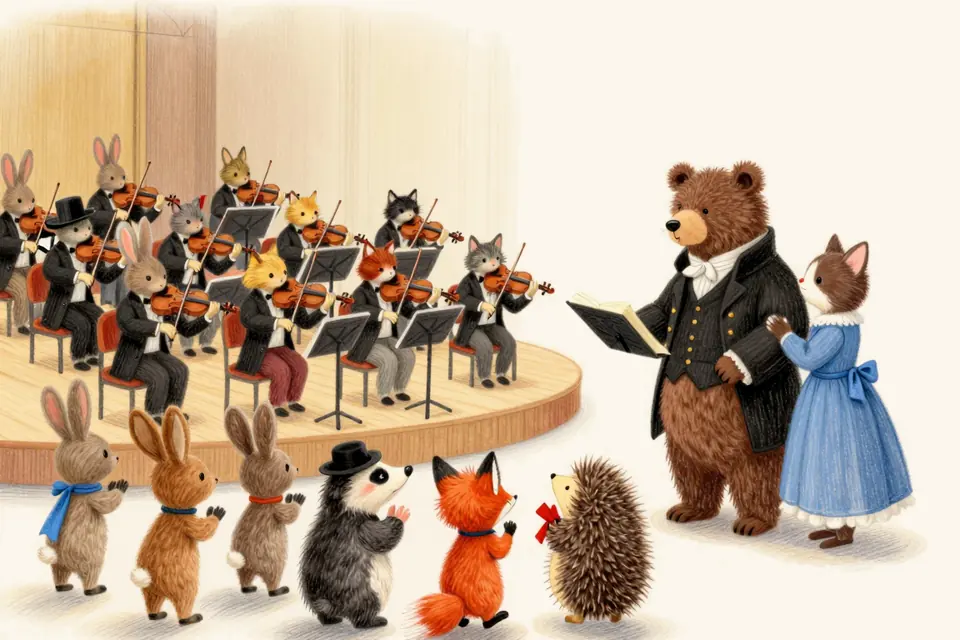
He did. In May 1824 Vienna heard his Ninth Symphony. Another conductor led the musicians, and Beethoven stood beside them. The story says a singer, Caroline Unger, gently turned him around so he could see the happy, clapping crowd.
Losing his hearing
When he was in his late twenties, Beethoven began to notice that his hearing was getting worse. Over the years it became harder and harder to hear. By the end of his life he was almost completely deaf.
He still wrote music, because he could imagine the sounds in his mind. In his later years, friends wrote their side of a conversation in small notebooks for him to read. He died in Vienna in 1827.
Some famous pieces
Beethoven's music often builds from tiny ideas into something huge.
- Symphony No. 5
- It starts with four famous notes: three short and one long.
- Für Elise
- A short, gentle piano piece loved by many students.
- Für Elise · The main tune, a short excerpt played on our piano from a public-domain score.
- Symphony No. 9
- His last symphony, first performed in 1824, ends with a chorus singing the "Ode to Joy".
- Ode to Joy (Symphony No. 9) · The main tune, a short excerpt played on our piano from a public-domain score.
- Moonlight Sonata
- A piano sonata whose slow, quiet first part is famous. The nickname was added after he died.
Try listening for
- Symphony No. 6, "Pastoral"
- In the slow second part, flute, oboe and clarinets copy a nightingale, a quail and a cuckoo.
- Symphony No. 7, second part
- The same rhythm keeps coming back, like steady footsteps, while more instruments join in and the sound grows.
- Piano Sonata No. 8, slow second part
- A warm, singing tune appears and then comes back again later, like a friend you meet again.
- Piano Sonata No. 8 "Pathétique", 2nd movement · The main tune, a short excerpt played on our piano from a public-domain score.
- Piano Concerto No. 5
- The orchestra plays big, loud chords, and the piano answers each one with a quick, sparkling run.
Clap the steady rhythm from the Symphony No. 7 slow part: one slow clap, two quick claps, then two slow claps. Repeat it ten times without speeding up. Then find the music and clap along.
A bridge between two eras
Beethoven began by writing in the clear, balanced Classical style. As he went on, his music became bigger and more personal. Because of this, he is often described as standing between the Classical and the Romantic eras.
Meanwhile, around the world
- 1770Cook sees Australia's east coast
The year Beethoven was baptised, the ship of James Cook sailed along the east coast of Australia.
- 1796First vaccine test
In England, Edward Jenner tried a cowpox vaccine, an early step toward protecting people from smallpox.
- 1800The first battery
The Italian scientist Alessandro Volta announced the voltaic pile, the first battery that gave a steady electric current.
- 1816The year without a summer
After the Mount Tambora volcano in Indonesia erupted in 1815, many places in Europe and North America had a cold, grey summer.
- 1825Steam railway opens
In England, the Stockton and Darlington Railway opened as the first public railway to use steam locomotives.
How this page was checked: each fact was looked up again in the sources below — encyclopedias, museums, universities, cultural institutions and makers. Wikipedia was used only as a pointer, never as a source. It has not been reviewed by an outside music expert; if you spot a mistake, please tell us at support@sunsunlabs.com.
- Encyclopaedia Britannica — Ludwig van Beethoven
- Beethoven-Haus Bonn — A life in pictures (biography)
- Beethoven-Haus Bonn — Chronology: Beethoven in Bonn
- Beethoven-Haus Bonn — Glossary: Conversation books
- Beethoven-Haus Bonn — Beethoven on postage stamps (Heiligenstadt Testament)
- Classic FM — Beethoven's history: 1770–1802
- Classic FM — Beethoven's history: 1813–1827
- Classic FM — If Beethoven was completely deaf, how did he compose music?
- Classic FM — Deafness and despair: the Heiligenstadt Testament
- Classic FM — Beethoven's 'Moonlight' Sonata
- Classic FM — How Beethoven's 'da-da-da-dumm' motif was almost lost
- Classic FM — 9 easy classical piano pieces (Für Elise)
- LA Phil — Symphony No. 6 “Pastoral” (program note)
- LA Phil — Symphony No. 7, 2nd movement Allegretto (program note)
- Schweizer Musikzeitung — Symphony No. 7 (Allegretto rhythm)
- Boston Symphony Orchestra — Piano Concerto No. 5 “Emperor” (program note)
- Hyperion Records — Piano Sonata in C minor 'Pathétique', Op 13 (notes)
- NOAA NESDIS — This day in history: Mount Tambora erupts in 1815
- Encyclopaedia Britannica — Voltaic pile
- Encyclopaedia Britannica — Stockton & Darlington Railway
- Score for the piano excerpt — Für Elise: Mutopia Project, Für Elise (WoO 59) — typeset by Stelios Samelis, from Breitkopf & Härtel 1888 (public domain)
- Score for the piano excerpt — Ode to Joy (Symphony No. 9): Mutopia Project, Ode to Joy (hymn setting, 8.7.8.7 D, SATB) — typeset by Peter Chubb (public domain)
- Score for the piano excerpt — Piano Sonata No. 8 "Pathétique", 2nd movement: Mutopia Project, Sonata No. 8 "Pathétique" (2nd Movement: Adagio cantabile), Op. 13 — typeset by Chris Sawer, from Peters 1910 (public domain)
Piano sound: Salamander Grand Piano by Alexander Holm (CC BY 3.0).