
Bars and time signatures: grouping the beats
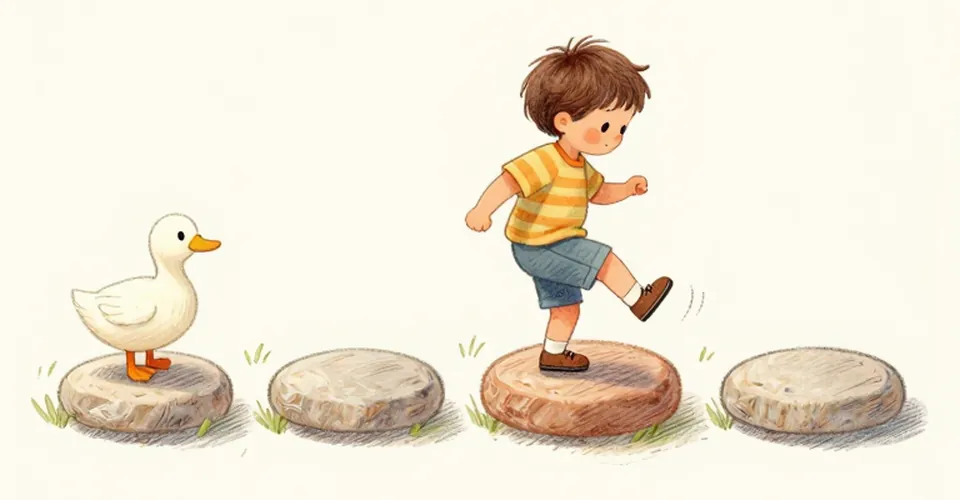
When you tap along to a song, some beats feel stronger than others. The strong beat comes back again and again, like the first step of every dance move. Musicians group the beats between two strong beats into a box called a bar, and a time signature tells you how big each box is.
In this lesson
Bars: little boxes of beats
In written music, thin vertical lines cut the music into little boxes. Each box is called a bar (or a measure), and each line is a bar line. Every bar holds the same number of beats.
The first beat of each bar is the strongest. It is the "one" that you count and the one you feel most when you tap along. The other beats are lighter. Press the button to hear three bars of four beats: listen for the strong beat coming back.
Strong beatWeak beat
Try it: tap along and say "ONE two three four", with a louder voice on ONE.
The time signature: two numbers
At the start of a piece, after the clef, you will find two numbers one above the other, like a fraction. This is the time signature.
The top number tells you how many of one kind of note fit in each bar. The bottom number tells you which kind: a 4 means a quarter note and an 8 means an eighth note. In 2/4, 3/4 and 4/4, each of those notes is one beat. So 3/4 has three beats in every bar, and 4/4 has four. In 6/8, 9/8 and 12/8, every three eighth notes join into one beat (a dotted quarter note). So 6/8 has two beats, 9/8 has three and 12/8 has four.
Pick a time signature below, then press Play to hear its bars and see which beat is the strong one.
Strong beatWeak beat
The most common one in pop and rock: strong, light, medium, light.
Pickup notes: starting before beat one
Not every song starts on beat one. Many start with one or a few notes before the first full bar. These are called a pickup (also an upbeat or anacrusis). The pickup leads into the first strong beat, a bit like taking a breath before you speak.
In 4/4, a one-beat pickup is counted as beat four: 4 | 1 2 3 4. The first full bar starts on the strong beat after it. Because the pickup borrows part of a bar, the last bar of the song is often shorter, so that the pickup and the last bar together make one full bar.
The Scottish song "Auld Lang Syne" starts with a pickup on the word "Should". Listen to it counted correctly, then counted as if the first note were beat one: the strong beats land on the wrong notes, and it sounds off.
- The bass drum marks beat one; the first note is beat four.
- Beat one is put on the first note, so the strong beats fall in the wrong places.
Try it: sing the start of a song you know, such as "Happy Birthday", and clap on the strong beats. Does your first clap come on the first word, or a little after it?
How each one feels
Every time signature has its own feeling, the way every dance has its own steps. 2/4 is a march. 3/4 is a waltz. 4/4 is the one you hear in most pop, rock and children's songs.
6/8 is a little different. It has six eighth notes in a bar, but they are heard in two groups of three, so it feels like two big beats that rock back and forth. Rocking lullabies and many folk dances use it.
How to find the time signature of a song
Play a song you know and tap along to the steady beat. Then listen for the beat that feels the biggest, the one where the music seems to start over. Count from that beat to the next one. If you count to 2, it is probably in 2; to 3, in 3; to 4, in 4.
Do not worry if you are not sure at first. Everyone has to listen a few times. Use the quiz below to train your ear.
Little quiz: 2, 3 or 4?
Listen to the bars. How many beats are in each bar? The strong beat will help you.
Hear the styles on this page
- Listen for the four chords going round and a short, catchy tune you could sing back right away.
- Listen for the snare hitting hard on beats 2 and 4, and a short guitar riff that keeps coming back.
Piano sound: Salamander Grand Piano by Alexander Holm (CC BY 3.0).